

Does your TikTok Shop have a privacy policy that clearly explains how you collect and use your customers’ information?
When you run a TikTok Shop, you’re collecting personal data every time someone places an order, sends you a message, fills out a form, or interacts with your content.
With that comes a responsibility to be transparent about your data practices; that’s where a privacy policy comes in.
In this guide, I walk you through how you can make a privacy policy that addresses your data processing through TikTok Shop, the essential sections you must include, and how to create one that reflects your business and aligns with major privacy laws.
- How To Make a TikTok Shop Privacy Policy
- What Is a Privacy Policy?
- What Is TikTok Shop, and Why Does It Need a Privacy Policy?
- Does Your TikTok Shop Legally Need a Privacy Policy?
- What Are the Benefits of Having a Privacy Policy for Your TikTok Shop?
- What Should You Include in Your TikTok Shop Privacy Policy?
- Where To Display Your TikTok Shop Privacy Policy
How To Make a TikTok Shop Privacy Policy
To start, here’s how to create a privacy policy for your TikTok Shop.
Use a Privacy Policy Generator
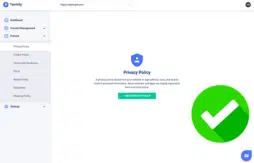
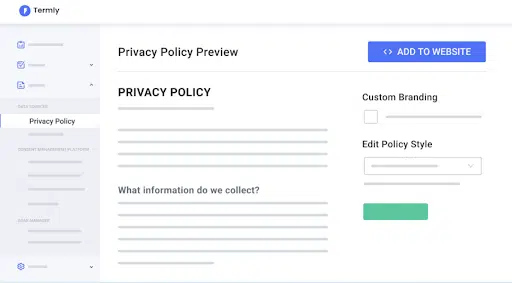
The fastest, easiest way to make a privacy policy for your TikTok Shop is to use Termly’s free privacy policy generator.
It includes provisions to help you meet the requirements of various data privacy laws, and it’s vetted by our legal team of privacy experts, who regularly update it to account for new legislation.
The generator asks simple questions about your business and its data processing activities, then makes a unique policy based on your answers.
Not only are our solutions legally backed, but Termly is also committed to protecting the privacy of our users.
With Termly, you get a privacy partner you can genuinely trust.
Use a Privacy Policy Template
If you want a quicker starting point, you can use Termly’s free privacy policy template.
It includes standard clauses that align with major privacy laws and can be easily customized to fit your TikTok Shop operations.
Update each section with details like:
- What customer information you collect when someone places an order
- How you use data for fulfillment, communication, return processing, or marketing
- Whether you work with third-party tools (payment processors, shippers, etc.)
You can remove any parts that don’t apply to your shop and add new ones if you use unique features or external services. This option is great if you want something fast but still flexible.
Write Your Own Privacy Policy
If you prefer to build your policy entirely from scratch, you’ll need a clear understanding of your data practices and the laws that apply to your audience.
Writing your own policy gives you the most control, but it also requires time and research.
If you’re not familiar with privacy regulations like GDPR or CCPA, it’s easy to leave out important disclosures, which can create unnecessary risks for your business.
If you decide to take this route, check out our guide on how to write a privacy policy from the ground up.
What Is a Privacy Policy?
A privacy policy is a document that explains how your business collects, uses, shares, and protects personal information.
It gives your customers a clear overview of what happens to their data when they interact with you.
For a TikTok Shop seller, this can include things like:
- What information you gather during checkout
- Whether you track customer behavior through analytics tools
- How you use data to process orders, returns, communicate, or market your products
- Who you share information with, such as payment processors or shipping providers
- What rights customers have over their personal data
- How they can reach you with questions or requests
Most major privacy laws, including the GDPR, CCPA, and others, require businesses that handle personal information to have a privacy policy.
Even when it’s not legally required, shoppers expect transparency, especially when buying from small or emerging online businesses.
A simple, easy-to-read privacy policy helps build trust by showing that you respect customer privacy and handle their data responsibly.
What Is TikTok Shop, and Why Does It Need a Privacy Policy?
TikTok Shop is TikTok’s built-in e-commerce tool that lets creators, small businesses, and brands sell products directly on the platform.
Customers can browse items, check out, message sellers, and track orders, all without leaving the app.
For many small sellers, TikTok Shop serves as both a storefront and a communication channel, meaning you’re naturally handling buyers’ personal information.
A privacy policy is essential because TikTok Shop sellers collect data in several ways, including:
- Order information (names, shipping addresses, contact details)
- Payment-related data processed through TikTok’s systems, such as card details and purchase information
- Messages or inquiries sent through TikTok’s chat
- Analytics and engagement data
- Personal data collected through Tiktok advertising tools such as device identifiers, visitors’ browsing data, device information, purchases
- Information shared through connected tools (email platforms, shipping apps, inventory software, etc.)
Even though TikTok processes much of the data on your behalf, you still operate as a data controller, which means you’re responsible for explaining how you use any customer information you access.
For instance, if you collect and use personal data by using TikTok advertising tools like TikTok pixel, you and TikTok will usually act as joint data controllers.
A privacy policy for TikTok Shop helps you:
- Comply with laws like GDPR, CCPA, and other global regulations
- Be transparent about what data you receive through TikTok and any third-party services
- Show buyers you’re a trustworthy seller
- Build credibility, especially if you run your shop without a standalone website
- Prepare for growth by documenting your data practices early
In short, if you collect or use customer information, even through a platform like TikTok, you need a clear privacy policy that tells buyers exactly how their data is handled.
Does Your TikTok Shop Legally Need a Privacy Policy?
Yes, in most cases, your TikTok Shop does need a privacy policy because you’re handling personal information from buyers, even if TikTok processes some of it for you.
What matters is whose data you collect, not the size of your shop.
If you receive or use personal information in any way (shipping details, email addresses, messages, analytics, etc.), privacy laws likely apply to you.
Here are the major regulations that may require you to have a privacy policy:
- General Data Protection Regulation (GDPR): Applies if you have customers in the EU or EEA. Requires businesses to explain what data they collect, why they collect it, who they share it with, and how users can exercise their rights.
- California Consumer Privacy Act (CCPA): Applies when you sell to customers in California and meet certain thresholds (like revenue or data volume). It requires transparency about how you use and share personal data and gives consumers specific rights over their information.
- Other U.S. state privacy laws: States like Colorado, Virginia, Connecticut, and Utah now have their own privacy laws with similar requirements, meaning even small sellers may be covered.
- Other global privacy laws: If your customers are in places like Canada (PIPEDA), Brazil (LGPD), or Australia, you may also have legal obligations to disclose how personal information is used.
Because TikTok Shops can attract a global audience, many sellers fall under multiple privacy frameworks simultaneously.
What Are the Benefits of Having a Privacy Policy for Your TikTok Shop?
A privacy policy isn’t just a legal requirement; it also helps your TikTok Shop run more smoothly and look more trustworthy to buyers. Here are the main benefits:
Legal Alignment
If you sell to customers in places like the EU, California, or other states with privacy laws, you’re expected to clearly explain how you collect and use personal data.
A privacy policy helps you stay aligned with these rules, even as a small creator.
Builds Trust With Buyers
Many TikTok users are cautious about buying from new or unfamiliar shops.
Having a privacy policy shows you’re transparent about how you handle things like shipping info, messages, and order updates.
That transparency can make buyers feel more comfortable completing a purchase.
Boosts Your Professional Image
A privacy policy instantly makes your shop look more established.
When customers see you’ve taken the time to outline your data practices, it signals that you run your shop seriously, not as a side hobby or temporary project.
Clarifies How You Use Customer Information
Even small TikTok Shops handle data, including names, addresses, contact details, and questions sent via TikTok messages.
A privacy policy helps customers understand how this information is used to fulfill orders and communicate with them.
If a customer wonders why you need their address, how long you store their info, or how to contact you, your privacy policy answers those questions up front.
This can help prevent disputes or misunderstandings later.
Supports Long-Term Growth
As your shop grows, whether you add a website, an email list, or new selling tools, having a privacy policy already in place makes expanding much easier.
You won’t have to scramble to create one later when you suddenly need it for a partnership or new sales channel.
What Should You Include in Your TikTok Shop Privacy Policy?
Your TikTok shop privacy policy should be transparent and easy for customers to understand.
It should clearly outline what information you collect, why you collect it, and how customers can manage their data.
Because TikTok Shop sellers mostly handle basic order and communication data, your policy should focus on the core practices that matter most to buyers.
Below are the essential sections every TikTok Shop privacy policy should include.
Data You Collect
Explain the types of personal information you receive through TikTok Shop and how you obtain it. Common examples include:
- Personal information: Names, shipping addresses, phone numbers, and email addresses (if provided).
- Order information: Items purchased, order history, and transaction details.
- Communication data: Messages or inquiries customers send through TikTok Shop or TikTok DMs.
- Basic analytics: Insights from your Shop dashboard, such as views or engagement.
Be transparent about whether the data is collected when customers place an order, send a message, or interact with your shop.
How and Why You Use Data
Your privacy policy should explain how customer information helps you operate your TikTok Shop. Be specific so buyers understand why their data is needed.
Common purposes include:
- Order fulfillment: Processing, packaging, and shipping purchases.
- Customer communication: Responding to questions or providing order updates.
- Record-keeping: Maintaining basic transaction records for tax or business purposes.
- Improving your shop: Understanding what products customers interact with or purchase.
- Ad personalization and ad measurement: You may use TikTok advertising tools to measure and optimize your ads on TikTok Shop.
If your customers are located in the EU, EEA, or UK, or if your business is otherwise subject to GDPR or similar laws, your privacy policy should clearly explain the legal bases you rely on when processing personal data.
Outside the EU/EEA, you can describe your purposes for using customer data without referencing legal bases
Data Sharing and Third Parties
Even small TikTok Shop sellers share data with limited third parties. Your policy should outline these categories.
Examples include:
- TikTok: TikTok may access and use a variety of customer personal data such as device identifiers, IP addresses, customers’ activity on TikTok Shop and other websites, and customers’ clicks, purchases, and orders.
- Shipping carriers: To deliver customer orders, they process data such as customer names, contact details, and delivery addresses.
- Payment processors: TikTok may use a third-party payment processor such as Stripe to process payments and handle financial information, but you may point out that you do not directly access full payment details.
Clarify that data is only shared as needed to complete purchases or operate your shop.
Data Retention and Deletion
Explain how long you keep customer information and why. This may include:
- Retaining order details for refunds, customer service, or tax requirements.
- Keeping messages for a reasonable time to manage inquiries or disputes.
- Removing or deleting data when it’s no longer needed for business or legal purposes.
If you don’t have fixed retention periods, you can explain the criteria you use to determine how long you keep customer information, such as legal requirements or business needs.
User Rights
Depending on where your customers live, they may have rights over their personal information. A privacy policy should briefly outline these rights in simple terms.
Common rights include:
- Accessing the personal data you hold
- Requesting corrections
- Requesting deletion (where legally allowed)
- Asking how their information is used
- Opting out of marketing messages (if your shop uses them)
- Right to withdraw consent
- Right to opt out of sale of personal data or use of personal data for targeted advertising purposes
Tell customers how they can contact you to submit a request.
Security Measures
Customers want to know their information is handled safely. Keep this section high-level and honest. You might include:
- That TikTok processes payments securely
- That you only access customer information needed to fulfill orders
- That you take reasonable steps to protect information shared through messages or order details
Avoid making absolute promises. Instead, express your commitment to protecting data.
Cookies and Tracking Technologies
Most TikTok Shop sellers do not directly place tracking technologies, but TikTok itself uses cookies and analytics tools. You can briefly explain:
- TikTok may collect certain technical or behavioral data when users interact with your shop
- Customers can review TikTok’s own privacy policy for platform-level tracking
- You do not independently use cookies unless selling through an additional website/platform
This section can be short and simple.
Policy Updates
Your privacy policy should explain how you’ll notify customers if the policy changes. A straightforward statement is fine, such as:
- You’ll update the policy on your hosted page
- Significant changes will be noted clearly
- Customers should check the policy occasionally for updates
Contact Information
End your policy with a straightforward way for customers to reach you.
This builds trust and meets legal expectations. Include:
- A business or customer service email address
- Your TikTok Shop handle or preferred communication method\
- A physical address (optional for small creators unless required by your region)
Even small shops should offer a reliable point of contact in case buyers have questions about their data.
Where To Display Your TikTok Shop Privacy Policy
Once you’ve created your privacy policy, make sure customers can easily find it.
Even if you only sell through TikTok Shop, you still need to place your policy somewhere accessible before customers share their information.
Here are the best places to display it:
- In your TikTok bio or link-in-bio tool: Many sellers don’t have a full website, so linking to your hosted privacy policy in your bio is often the simplest option. If you use a link tool like Linktree or Beacons, add it as a standalone button.
- On any website or landing page you use: If you drive TikTok traffic to a personal website, portfolio, or product page, include your privacy policy in the footer. This ensures it’s visible wherever customers enter information.
- At checkout (if you use an external shop): If you send customers to a secondary storefront or payment page outside TikTok, your privacy policy should appear near the checkout button or in the footer of that page.
- Anywhere you collect customer details: Include your privacy policy link wherever customers submit their information.
Making your privacy policy accessible not only helps you meet legal expectations.
It also reassures customers that your shop is trustworthy and transparent as they interact with your business.

Written by Hanna De La Garza
Hanna De La Garza is a privacy writer at Termly with a Bachelor’s Degree in Journalism from the University of Florida. She creates engaging resources on data privacy, consent management, regulatory updates, and more.
Read all posts by Hanna De La Garza
Reviewed by Ali Talip Pınarbaşı, CIPP/E, & LLM
Ali is a London-based Data Privacy Law Solicitor with a Master of Laws Degree in EU Privacy law at King's College London. He has six years of experience in advising businesses on how to comply with data protection laws.
Read all posts reviewed by Ali Talip Pınarbaşı, CIPP/E, & LLM