

Wichtigste Erkenntnisse
- Ein Haftungsausschluss ist eine rechtliche Erklärung einer Person oder eines Unternehmens, in der diese erklären, dass sie nicht für Verletzungen, Schäden oder Verluste haftbar sind, die durch die Nutzung ihrer Produkte oder Dienstleistungen entstehen.
- Die meisten Website-Betreiber fügen einen Haftungsausschluss als Klausel in ihre Allgemeinen Geschäftsbedingungen ein.
- Dies kann auch als Haftungsbeschränkungsklausel, Haftungsausschluss, Ausschluss- oder Befreiungsklausel, Freistellungsklausel oder Entschädigungsklausel bezeichnet werden.
Ein Haftungsausschluss ist eine rechtliche Erklärung, die Kunden darüber informiert, dass Sie nicht für Schäden, Verletzungen oder andere Verluste haftbar sind, die durch die Verwendung Ihres Produkts entstehen.
Es ist in der Regel in Ihren Allgemeinen Geschäftsbedingungen enthalten.
Im Folgenden erkläre ich Ihnen mehr über Haftungsausschlüsse, präsentiere Ihnen Beispiele und zeige Ihnen, wie Sie einen solchen erstellen können.
- Was ist eine Haftungsausschlusserklärung?
- Was kann in einem Haftungsausschluss abgedeckt werden?
- Wer braucht eine Haftungsausschlusserklärung?
- Was sind die Vorteile eines Haftungsausschlusses?
- Was sind die Risiken, wenn man keinen Haftungsausschluss verwendet?
- Beispiele für Haftungsausschlüsse
- Wie kann ich einen Haftungsausschluss formulieren?
- Haftungsausschluss Häufig gestellte Fragen
Was ist eine Haftungsausschlusserklärung?
Ein Haftungsausschluss ist eine Erklärung, die besagt, dass Sie nicht für Schäden verantwortlich sind, die durch die Nutzung Ihres Produkts oder Ihrer Dienstleistung entstehen.
Dies umfasst Schäden, die entstehen durch:
- Wie jemand Ihr Produkt oder Ihre Dienstleistungen nutzt und welche Schäden sich aus dieser Nutzung ergeben,
- Fehler oder Fehlinformationen in den Inhalten Ihrer Website,
- Inhalte, die auf Links von Dritten erscheinen, oder Schäden, die durch das Anklicken dieser Links entstehen.
Es gibt auch spezifische Arten von Haftungsausschlüssen, die für verschiedene Branchen gelten, wie beispielsweise Gesundheits-, Rechts- oder Finanzdienstleistungen.
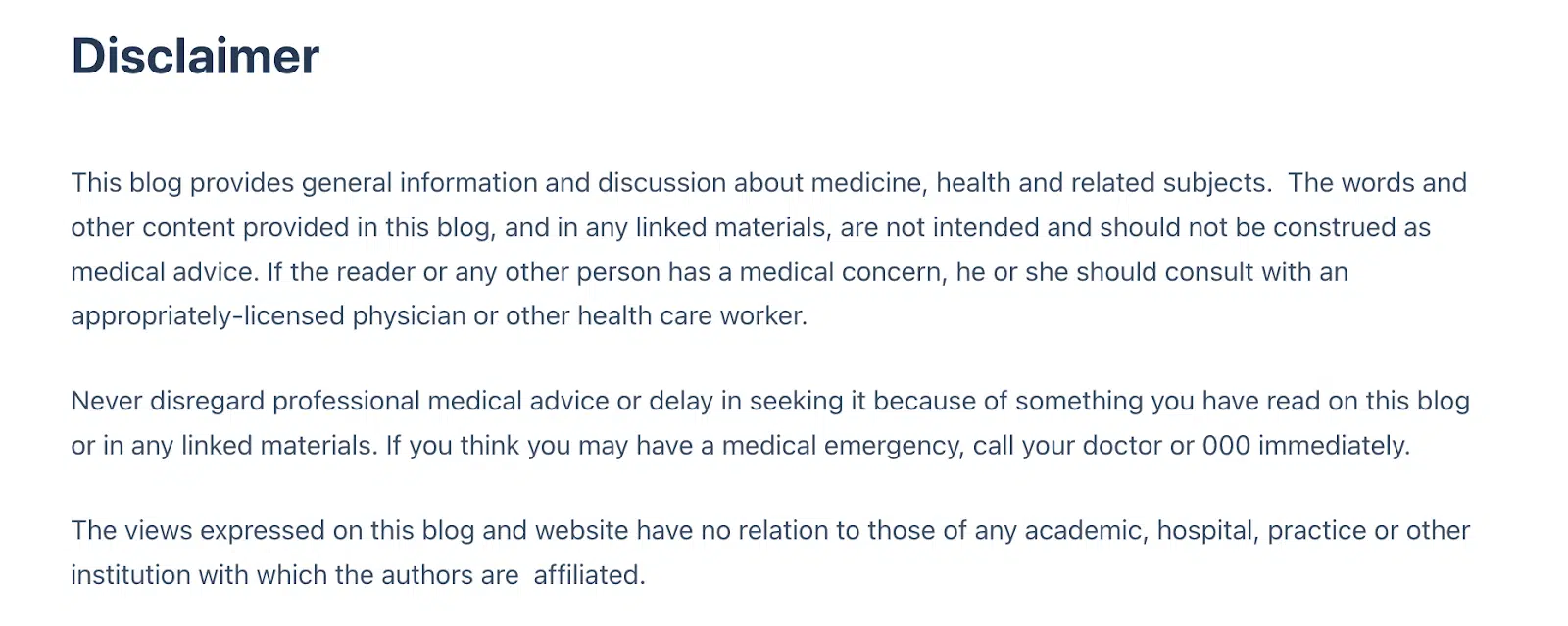
Beispielsweise sollte eine Website, die sich mit Gesundheitsratschlägen befasst, einen Haftungsausschluss enthalten, der darauf hinweist, dass die Inhalte der Website keine formelle medizinische Beurteilung durch einen Arzt ersetzen, wie in dem folgenden Beispiel aus dem medizinischen Blog „Life in the Fastlane“ zu sehen ist.
Was ist der Unterschied zwischen einem Haftungsausschluss und einem Haftungsausschluss?
Es gibt keinen Unterschied zwischen einem Haftungsausschluss und einem Haftungsausschluss. Diese beiden unterschiedlichen Bezeichnungen beziehen sich auf dasselbe.
Tatsächlich kann dieser Haftungsausschluss viele verschiedene Bezeichnungen haben, darunter:
- Haftungsbeschränkungsklausel
- Haftungsausschluss
- Haftungsausschluss
- Haftungsbeschränkungsklausel
- Haftungsausschluss für Schäden
Achten Sie nur darauf, einen eindeutigen Titel zu wählen, damit die Leser verstehen, was in der Klausel steht.
Bietet eine Haftungsausschlusserklärung Rechtsschutz?
Ja, ein Haftungsausschluss kann einen gewissen rechtlichen Schutz bieten, aber er ist kein Schutzschild, das Sie vor allen möglichen Rechtsstreitigkeiten schützt.
Wenn Sie mit rechtlichen Schritten konfrontiert sind und keine Fahrlässigkeit vorliegt, kann dies eine hervorragende Unterstützung für Ihre Verteidigung sein, da es hilft, nachzuweisen, dass Sie die geschädigte Partei im Voraus darüber informiert haben, dass Sie keine Verantwortung für solche potenziellen Schäden tragen.
Wenn jedoch jemand Ihr Produkt gekauft hat und dann aufgrund Ihrer Fahrlässigkeit bei der Herstellung dieses Produkts einen Schaden erlitten hat, wird Ihnen ein Haftungsausschluss wahrscheinlich nicht helfen.
Hier ist ein hypothetisches Szenario, in dem ein Haftungsausschluss hilfreich sein könnte:
- Stellen Sie sich vor, Sie hätten einen Blogbeitrag darüber geschrieben, wie man durch die Planung und Abwicklung der eigenen Scheidung hohe Anwaltskosten vermeiden kann. Der Beitrag beschreibt die erforderlichen Formulare und empfohlenen Strategien für die bestmöglichen finanziellen Ergebnisse.
- Jemand hat Ihren Rat genau befolgt, ohne sich zu vergewissern, dass es keine Änderungen oder Aktualisierungen der erforderlichen Formulare gegeben hat. Wie sich herausstellte, hat das Gericht die erforderlichen Unterlagen geändert, nachdem Sie Ihren Beitrag hochgeladen hatten. Die Scheidung des Lesers hat sich verzögert, und es drohen finanzielle Konsequenzen.
- Der Leser versucht, Ihnen die Schuld dafür zu geben, dass Sie fehlerhafte Informationen bereitgestellt haben, was zu erheblichen emotionalen und finanziellen Problemen geführt hat.
- Sie sind jedoch besser vor diesen Haftungsansprüchen des Lesers geschützt, da Sie sich durch die Veröffentlichung eines Haftungsausschlusses abgesichert haben, in dem es heißt:
„Ihre Vorschläge stellen keine Rechtsberatung dar, und Sie können nicht garantieren, dass die Informationen immer aktuell oder korrekt sind.“ - Die Erklärung hat zwar nicht unbedingt verhindert, dass eine Zivilklage vorangetrieben wurde, aber sie hat Ihnen geholfen, sich vor Gericht besser verteidigen zu können.
Was kann in einem Haftungsausschluss abgedeckt werden?
Der Haftungsausschluss, den Sie für Ihr Unternehmen verfassen, kann so detailliert sein, wie Sie es wünschen, und kann sich auf alle oder einzelne Waren oder Dienstleistungen beziehen, die Sie anbieten.
In diesem Fall umfasst der Begriff „Waren“ Folgendes:
- Greifbare Gegenstände: Wie ein tatsächlicher Gegenstand oder ein Objekt.
- Immaterielle Dienstleistungen: Wie Beratung oder Information.
- Eine Mischung aus beidem: Wie ein Buch, das Sie geschrieben haben und in dem Sie Ihre Vorschläge oder Ideen zusammengestellt haben.
In den meisten Fällen schützen Sie Haftungsausschlüsse vor den folgenden spezifischen Arten von Schäden, die Ihren Kunden durch die Nutzung Ihrer Produkte oder Dienstleistungen entstehen können:
- Es besagt, dass Sie nicht für die Richtigkeit der Inhalte oder Informationen auf Ihrer Website oder Plattform verantwortlich sind.
- Es besagt, dass Sie nicht für körperliche Schäden, Beschädigungen oder Verluste verantwortlich sind, die einem Kunden bei der Nutzung Ihres Produkts oder Ihrer Dienstleistungen entstehen können.
- Es besagt, dass Sie nicht für Links von Dritten auf Ihrer Website und für Schäden verantwortlich sind, die Kunden entstehen, die auf diese Links klicken.
- Es kann auch angegeben werden, dass Ihre Website oder Ihre Inhalte keine rechtliche, medizinische oder finanzielle Beziehung zwischen Ihnen und Ihren Nutzern begründen oder dass sie keinen Ersatz für die Konsultation eines medizinischen, rechtlichen oder finanziellen Fachmanns darstellen.
Der Versicherungsschutz, den Sie benötigen, hängt ganz von Ihrem Unternehmen und dessen Angebot ab.
Was kann durch einen Haftungsausschluss nicht abgedeckt werden?
Ein Haftungsausschluss gibt Ihnen weder das Recht, absichtlich irreführende, unehrliche oder ungenaue Informationen bereitzustellen, noch entbindet er Sie von Ihrer Verantwortung für die Qualität Ihrer Produkte und Dienstleistungen.
Wenn ein Kunde aufgrund Ihrer Fahrlässigkeit einen Schaden erleidet, werden Sie höchstwahrscheinlich für diesen Schaden haftbar gemacht, unabhängig davon, ob Sie einen Haftungsausschluss haben oder nicht.
Wer braucht eine Haftungsausschlusserklärung?
Jedes Unternehmen und jede Website kann in irgendeiner Form einen Haftungsausschluss gebrauchen. Er schützt Sie für den Fall, dass Inhalte auf Ihrer Website falsch sind oder jemand Ihr Produkt missbraucht und dadurch eine Verletzung oder einen Schaden erleidet.
Bestimmte Branchen sind besonders anfällig für Rechtsstreitigkeiten, weshalb eine solche Haftungsausschlussklausel umso wichtiger ist.
Dies gilt für Branchen, in denen die Verbreitung veralteter oder falscher Informationen erhebliche finanzielle oder emotionale Belastungen verursachen könnte, oder für Produkte, die potenziell erhebliche körperliche Schäden verursachen könnten, zum Beispiel:
- Gesundheit, Wellness oder medizinische Beratung
- Rechtsberatung
- Finanzielle Beratung
- Informationen zur psychischen Gesundheit
- Trainingsprogramme
- Geschäftsgebäude
- Lebensberater
- Produkte für Kinder
- Vitamine und Nahrungsergänzungsmittel
- Trainingskleidung
- Werkzeuge und Ausrüstung
Aus diesem Grund setzen sich Berufsverbände wie die American Bar Association bereits seit 2011, als sie die Formal Opinion 10-457 veröffentlichten, für hochwertige, transparente Haftungsausschlüsse auf allen juristischen Websites ein.
Haftungsausschluss für immaterielle vs. materielle Güter und Dienstleistungen
Sie benötigen einen Haftungsausschluss für immaterielle und materielle Güter.
Obwohl es unwahrscheinlich erscheint, dass sie zu zivilrechtlichen Haftungsansprüchen führen, können immaterielle Güter ohne Haftungsausschluss zu Problemen führen. Wenn jemand Informationen missbraucht oder sich zu sehr auf sie verlässt, kann dies enorme Folgen haben.
Wenn ein Leser beispielsweise ein empfohlenes Trainingsprogramm durchführt, ohne einen Arzt zu konsultieren, könnte er etwas tun, das unsicher ist oder über die Fähigkeiten seines Körpers hinausgeht und zu einer schweren Verletzung führt.
Bei materiellen Gütern kann im Grunde jedes Produkt Schaden anrichten, wenn es falsch verwendet wird oder in die falschen Hände gerät.
Alle Gegenstände, selbst wenn sie perfekt konstruiert und hergestellt sind, können erhebliche körperliche Schäden verursachen.
Durch die Veröffentlichung eines produktbezogenen Haftungsausschlusses, der darauf hinweist, dass Kunden die Verantwortung für alle mit den Produkten verbundenen Risiken übernehmen, können Sie sich vor einer Haftung schützen.
Wenn Sie Produkte verkaufen und Inhalte auf einer Website veröffentlichen, benötigen Sie einen aussagekräftigen Haftungsausschluss, der sowohl materielle als auch immaterielle Güter berücksichtigt.
Was sind die Vorteile eines Haftungsausschlusses?
Ein Haftungsausschluss hat zwei wesentliche Vorteile:
- Es schützt Ihr Unternehmen: Dieser Haftungsausschluss schützt Ihr Unternehmen vor Verbrauchern, die Ihre Produkte oder Dienstleistungen missbrauchen oder durch diese Schaden erleiden.
- Es schützt Ihre Kunden: Es erinnert die Nutzer auch daran, dass sie verantwortungsbewusst mit Ihren Produkten und Dienstleistungen umgehen sollten, und fordert sie auf, beim Lesen der Inhalte auf Ihrer Website eigene Recherchen anzustellen.
Es handelt sich um einen wichtigen Haftungsausschluss, den alle Websites veröffentlichen sollten.
Was sind die Risiken, wenn man keinen Haftungsausschluss verwendet?
Wenn Sie keinen Haftungsausschluss veröffentlichen, riskieren Sie, dass Ihnen in Zukunft zivilrechtliche Klagen drohen.
Wenn Sie diesen Haftungsausschluss nicht haben, können Ihre Kunden zu Recht behaupten, dass Sie nicht darauf hingewiesen haben, dass Ihr Angebot schädlich sein könnte.
Wenn Sie sie nicht warnen, haben sie möglicherweise Anspruch auf Entschädigung für den erlittenen Schaden.
Die Menschen haben ein Recht darauf, umfassend informiert zu werden. Wenn der von Ihnen angebotene Ratschlag oder Artikel möglicherweise jemandem in irgendeiner Weise Schaden zufügen könnte, sollten Sie dies offen kommunizieren, bevor Sie weitermachen.
Beispiele für Haftungsausschlüsse
Hier sind einige Beispiele aus dem wirklichen Leben für Haftungsausschlüsse.
Die amerikanische Anwaltskammer
Nachstehend finden Sie ein Beispiel für einen Haftungsausschluss der American Bar Association, aus dem hervorgeht, dass es sich trotz seiner Autorität nicht um eine Rechtsberatung handelt und das Lesen der Informationen keine Mandatsbeziehung begründet.
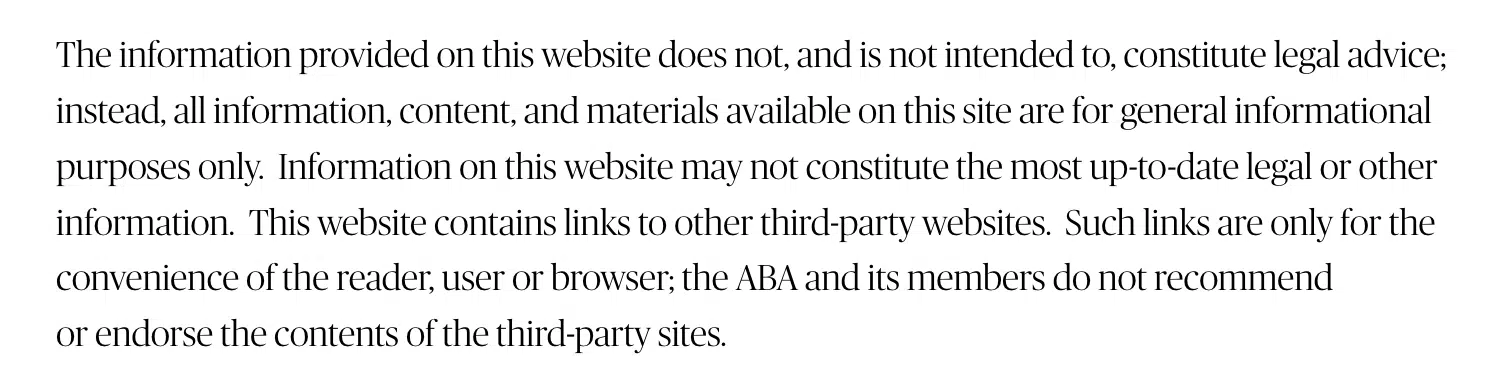
Darüber hinaus wird gezeigt, wie Sie sich wirksam vor der Haftung für Websites Dritter schützen können, auf die Ihre Seite möglicherweise verlinkt.
Dies ist ein guter Haftungsausschluss, da er umfassend und leicht verständlich ist und genau auf die Art und Weise zutrifft, wie ein durchschnittlicher Nutzer mit der ABA-Website und den ABA-Diensten interagieren würde.
Walmart
Das nächste Beispiel stammt von der Website von Walmart, die ich ausgewählt habe, weil sie eine in Haftungsausschlüssen häufig verwendete Formulierung enthält: „auf eigene Gefahr“:
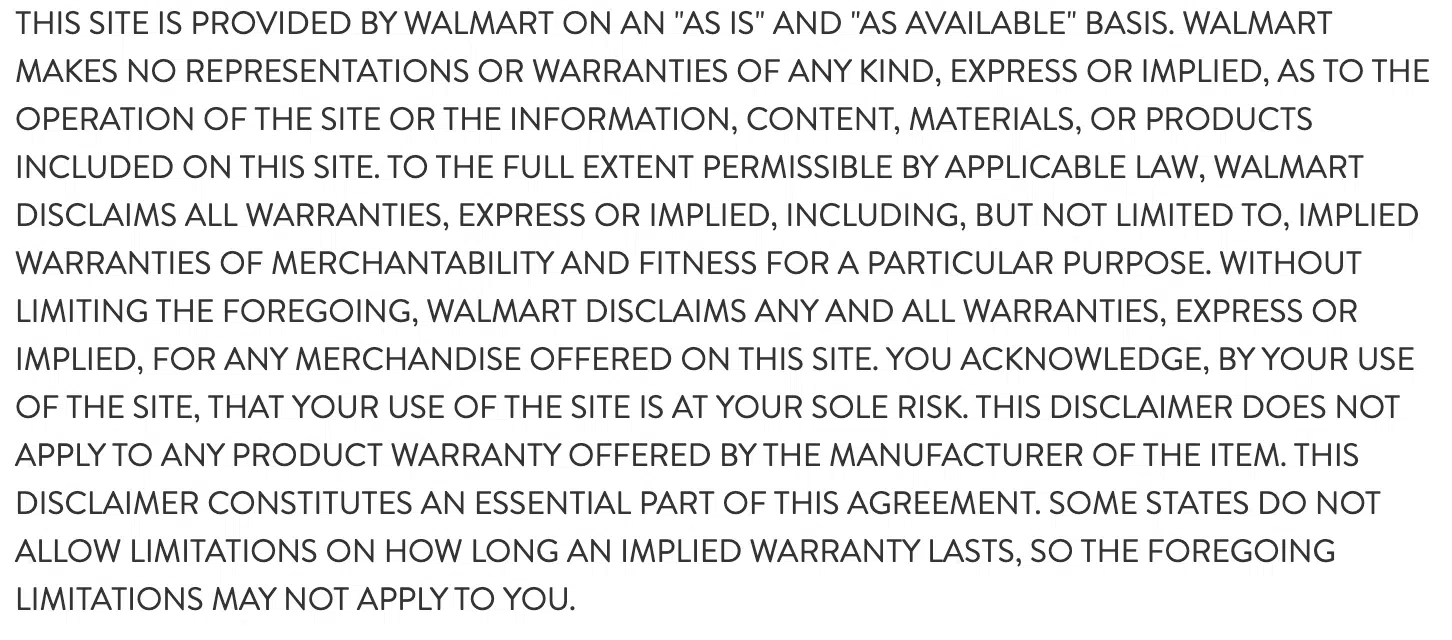
Walmart verwendet häufig in solchen Haftungsausschlüssen vorkommende Formulierungen, um zum Ausdruck zu bringen, dass das Unternehmen nicht für Schäden haftet, die einem Kunden entstehen könnten.
Außerdem wird sie vollständig in Großbuchstaben geschrieben, was ein weiteres häufiges Merkmal dieser Klausel ist. Dadurch wird die Klausel hervorgehoben und auffälliger, was für bestimmte Unternehmen eine gesetzliche Anforderung sein kann.
Wie kann ich einen Haftungsausschluss formulieren?
Verwenden Sie einen Haftungsausschluss-Generator
Der einfachste Weg, einen Haftungsausschluss zu erstellen, ist die Verwendung eines Disclaimer Generator wie Termly.
Es stellt einfache Fragen zu Ihrem Unternehmen und generiert automatisch individuelle Haftungsausschlüsse auf Grundlage Ihrer Antworten.
Verwenden Sie eine Haftungsausschluss-Vorlage
Sie können auch eine kostenlose Haftungsausschluss-Vorlage verwenden, in der die meisten Formatierungen bereits für Sie vorgenommen wurden.
Sie müssen jedoch auch manuell die leeren Felder mit Informationen zu Ihrem Unternehmen und den Punkten ausfüllen, für die Sie ausdrücklich keine Verantwortung übernehmen.
Wie man einen Haftungsausschluss verfasst
Um Ihren eigenen Haftungsausschluss zu verfassen, befolgen Sie diese Schritte:
- Seien Sie sehr umfassend. Identifizieren Sie sorgfältig alle materiellen und immateriellen Güter oder Dienstleistungen, die nach Ansicht des Kunden Schäden verursacht haben könnten, und nehmen Sie diese in Ihre Erklärung auf.
- Seien Sie sehr klar. Verwenden Sieeine einfache, unkomplizierte Sprache, die für normale Nutzer leicht verständlich ist.
- Bleiben Sie beim Thema Ihrer Branche. Kopieren Sie nicht den Haftungsausschluss anderer, sondern erklären Sie konkret, wofür Ihr Unternehmen in Bezug auf Ihre spezifische Branche, Ihre Produkte und Dienstleistungen nicht verantwortlich ist.
- Platzieren Sie ihn an mehreren leicht auffindbaren Stellen. Wenn Sie ihn deutlich und gut sichtbar auf verschiedenen Seiten platzieren , können Sie sicherstellen, dass die Besucher Ihrer Website ihn finden und lesen können.
Der Haftungsausschluss, den Sie verfassen, muss nicht aufwendig oder komplex sein.
Vergewissern Sie sich stattdessen, welche Produkte und Dienstleistungen Ihr Unternehmen anbietet, und weisen Sie darauf hin, dass Sie nicht für etwaige negative Folgen verantwortlich sind, die Kunden erfahren könnten.
Haftungsausschluss Häufig gestellte Fragen
Weitere Informationen zu Haftungsausschlüssen finden Sie in den folgenden FAQs.
Was ist ein Haftungsausschluss?
Ein „Haftungsausschluss“ ist eine andere Bezeichnung für einen Haftungsausschluss.
Es informiert die Menschen darüber, dass ein Unternehmen oder eine Einzelperson nicht für Verletzungen, Schäden oder andere Verluste haftbar gemacht werden kann, die durch die Nutzung ihrer Produkte oder Dienstleistungen verursacht werden.
Wie schreibe ich einen einfachen Haftungsausschluss?
Um einen einfachen Haftungsausschluss zu verfassen, gehen Sie wie folgt vor:
- Identifizieren Sie alle materiellen und immateriellen Güter oder Dienstleistungen, die nach Ansicht des Kunden Schäden verursacht haben könnten, und nehmen Sie diese in Ihre Erklärung auf.
- Verwenden Sie eine einfache, klare Sprache, die für alle Benutzer leicht zu lesen und zu verstehen ist.
- Bleiben Sie beim Thema Ihrer Branche und erklären Sie konkret, wofür Ihr Unternehmen in Bezug auf Ihre Produkte und Dienstleistungen nicht verantwortlich ist.
- Hängen Sie es an gut sichtbaren Stellen auf, damit alle Ihre Benutzer die Möglichkeit haben, es zu finden und zu lesen.
Was ist eine Aussage, die Verantwortung ablehnt?
Eine Erklärung, die die rechtliche Verantwortung ablehnt, wird als „Haftungsausschluss“ bezeichnet und dient dazu, Nutzer über mögliche Risiken zu informieren, denen sie bei der Nutzung eines Produkts oder einer Dienstleistung ausgesetzt sein könnten.
Die meisten Aspekte des Geschäftslebens sind kompliziert, aber nicht in diesem Fall.
Ein Haftungsausschluss ist eine einfache Strategie, die den notwendigen rechtlichen Schutz bietet.
Selbst wenn Sie der Meinung sind, dass Ihre Online-Inhalte, -Dienstleistungen oder -Produkte völlig harmlos sind, ist es dennoch eine gute Idee, einen Haftungsausschluss aufzunehmen.
Fast jedes Unternehmen ist zumindest in gewissem Maße zivilrechtlichen Haftungsansprüchen ausgesetzt, und ein Haftungsausschluss ist die beste Möglichkeit, schwerwiegende finanzielle Folgen zu vermeiden.

Geschrieben von Natasha Piirainen
Natasha Piirainen ist Autorin zum Thema Datenschutz. Sie hat einen Bachelor-Abschluss in Englisch und Philosophie vom Wheaton College und verfügt über mehr als 10 Jahre Berufserfahrung in der forschungsorientierten Entwicklung von Inhalten.
Alle Beiträge von Natasha Piirainen lesen
Überprüft von Masha Komnenic CIPP/E, CIPM, CIPT, FIP
Masha Komnenic ist Rechtsberaterin und Director of Global Privacy Termly. Sie hat einen Abschluss in Rechtswissenschaften der Universität Belgrad. Sie ist spezialisiert auf die Umsetzung, Überwachung und Prüfung der Einhaltung von Datenschutzbestimmungen (HIPAA, PIPEDA, ePrivacy-Richtlinie, DSGVO, CCPA, POPIA, LGPD) durch Unternehmen.
Alle Beiträge lesen, die von Masha Komnenic CIPP/E, CIPM, CIPT, FIP geprüft wurden
Benutzerdefinierten Haftungsausschluss generieren