

If you use Facebook Ads, you’re required to have a publicly accessible privacy policy that follows all applicable laws and meets Meta’s ad requirements.
This is essential because privacy laws require you to inform users about what data you collect from them and what it’s used for, including advertising and marketing purposes.
Some privacy laws, like several of the U.S. state-level legislation, grants users the right to opt out of targeted advertising and sale of personal data altogether.
Below, I summarize how to make a privacy policy for Facebook Ads, including what goes into it, why it’s important, and the laws that might affect it.
Creating a Privacy Policy for Facebook Ads
To start, I’ll outline three of the easiest ways you can make your privacy policy and account for your use of Facebook Ads.
Use a Privacy Policy Generator
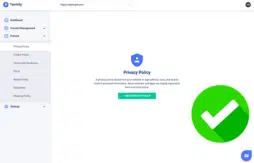
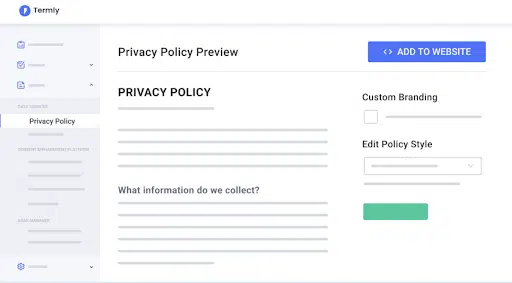
One of the easiest ways to make a privacy policy when you use Facebook Ads is to use Termly’s free Privacy Policy Generator.
Vetted by our legal team and data privacy experts, it asks basic questions about your business, data processing activities, and any information used for advertising purposes.
It then uses those answers to make your unique policy that you can easily embed directly onto your site.
At Termly, we also pride ourselves on transparency and trust and are fully committed to protecting the privacy of our users.
Use a Privacy Policy Templates
If you use Facebook Ads and still need a privacy policy, you can also try Termly’s free privacy policy template to make your custom policy.
To use it, you need to manually fill in the blank sections with accurate details about your business and how you use personal information.
You can also edit and add other information as necessary or remove clauses that don’t apply to you. Add it to your website as an HTML snippet, Word Doc, Google Doc, or PDF.
Write It Yourself
Finally, you can also try to write your own privacy policy for your website, but you should only attempt this if you have extensive technical knowledge and are familiar with data privacy laws and their requirements around advertising.
Your policy must be accurate, concise, and must include all mandatory disclosures required by applicable privacy laws; otherwise, you could be fined by a supervisory authority for violating privacy laws.
Be very thorough, particularly about how you share consumer data with third-party services like Facebook Ads.
Consider consulting a privacy lawyer or attorney to review the final document, if necessary.
How NOT To Make a Facebook Ads Privacy Policy
Now let’s briefly discuss what to avoid.
- Don’t copy another business’s privacy policy. These policies are likely to be protected by copyright law, which means copying one may amount to plagiarism, which is illegal. Not to mention that another business policy won’t accurately apply to your business anyway. It’s just not worth the risk.
- Don’t use AI to generate a privacy policy. AI is a useful tool but is not the most effective tool to make comprehensive and nuanced legal policies. These documents must include specific details about how you collect and use personal information. Most AI cannot know all of these specific details unless you directly feed the personal data to it, which may present some additional privacy issues. It might also still hallucinate or include falsities in your final policy. It’s best to use a privacy solution or consult a lawyer and privacy experts.
- Don’t use an insecure or unreliable ‘generator’ or ‘template.’ Avoid using generators that supposedly cover privacy laws but actually don’t. Also avoid generators that up charge for common free features typically included in templates, or generators that aren’t updated or maintained by legal teams and privacy experts.
Do I Need a Privacy Policy If I Use Facebook Ads?
If you use Facebook Ads, you most likely need to have a privacy policy as required by laws and by Meta’s advertising standards.
For instance, when you use Meta pixel to retarget your potential leads with ads, you will be sharing personal data with Facebook like website visitors’ clicks, page views, and purchases.
Major privacy laws such as the EU GDPR, UK GDPR, and California’s CCPA require you to disclose this data sharing activity in your privacy policy.
Additionally, Meta’s advertising standards require ad publishers to display a publicly available privacy policy.
If you don’t properly meet these guidelines, Meta might terminate your use of their advertising tools.
Plus, the benefits of having a privacy policy go beyond compliance. It also shows your users that your site is transparent and secure, which shows you respect their personal privacy.
It also lets users know exactly what you want to do with their information, so they can make an informed choice when using your platform, which helps build and maintain consumer trust.
Laws That Impact Facebook Ads Privacy Policies
Several privacy laws might impact your business if you’re using Facebook Ads or any other similar advertising platform that processes personal information.
Any of the following laws could impact you depending on details like where you are located or where your users come from:
- EU General Data Protection Regulation (“GDPR”) and E-Privacy Directive
- California Consumer Privacy Act
- UK GDPR, and the PECR
- Australia Privacy Act 1988
- New Zealand Privacy Act 2020
- South Africa Protection of Personal Information Act
- U.S. state-level consumer privacy laws
Information to Include in a Facebook Ads Privacy Policy
To help Facebook Ads users more easily make a privacy policy, I’ve summarized some of the most common clauses that belong in this legal document.
What Data You Collect
Your privacy policy should have a clause explaining what personal data you collect from users, and this list must include any data shared with Facebook Ads..
This includes data points like names, email addresses, billing details, payment information, purchase details, IP address, and website visitors’ browsing activity.
To ensure this information is easy for your users to read and understand, present it in a simple format, like a bullet list or a table.
This section is required by nearly every privacy law, which typically prioritizes transparently presenting this information to users.
Why You Collect the Data
It’s equally important that your privacy policy explains why you collect the data from users.
You must state when you’re collecting data for advertising or marketing purposes.
To illustrate, when you use Meta Pixel for targeted advertising purposes, you must disclose this purpose clearly in your privacy policy.
Legal Basis for Why You Collect and Handle the Data
Under the EU and UK privacy laws, you must identify and rely on a lawful basis to collect and process personal data for purposes.
This is referred to as your legal basis under laws like the GDPR, which outlines six lawful grounds for collecting personal data.
When you use Meta Ads and Meta Pixel to show targeted ads to your target audience, you must rely on a legal basis, most likely the informed consent of your target audience, and then address this legal basis in your privacy policy.
Privacy laws in the U.S., however, typically state that you must limit your data collection only to what is necessary to complete the purposes as presented to users in your privacy notice.
How You Collect the Data
Privacy laws also require you to include a clause that explains how you collect this personal data from users.
If you’re using Facebook Ads, then you must include if any cookies or other trackers are used to collect any personal details about consumers.
In this clause, you should also explain if you collect data in any of these other ways:
- Directly from the consumer
- Using automated technologies, including cookies, trackers, and plugins
- From publicly available information
- Through social media
- Through forms on your website
- Through sign-up forms
- In person flyers or paperwork
- In any other way
- Third-party data suppliers such as Apollo or ZoomInfo
Third Party Data Sharing
Because you’re using Facebook Ads, you’re also sharing consumer personal data with the platform, which may include website visitors’ browsing activity, and their hashed personal data such as email address, phone number, and location.
This data sharing operation must be addressed in a clause in your privacy policy.
This clause is required by privacy laws like the GDPR and the CCPA.
More specifically, you must clearly list all categories of data shared with third parties, and all categories of third parties the data is shared with.
Consumer Rights Over Their Data
Privacy laws and Meta’s ad standards require you to include a clause in your policy explaining what rights your users have over their personal data and how they can act on those rights.
If multiple laws apply to you, consider using multiple clauses for each one. This makes it easier for users to find information that applies to their specific cases.
Typically, users have the right to access, correct, and delete their data, and the right to opt out of specific processing, like targeted advertising or the selling or sharing of their information.
This means the data you share with Facebook Ads must be accessible enough for you to comply with any user requests to follow through on any of these rights.
Children’s Data Clause
Meta imposes restrictions on how you can advertise to children under the age of 18. Because of these strict rules, it is important to include a children’s data clause in your privacy policy addressing how you handle information about minors.
Specifically, you need to explain how legal guardians can contact you if they believe you’ve accidentally collected data about their child, and this includes data collected through Facebook Ads cookies or trackers.
Cookies and Other Trackers
If your website uses any cookies or other trackers, which would be the case when using Facebook Ads, then you must disclose these details to consumers, typically in a privacy policy, cookies policy, or both.
You should also include a link to your official cookie policy.
Under privacy laws such as the GDPR and the CCPA/CPRA, cookies that can identify, or be linked to a user are considered to be personal information or personal data.
Therefore, the collection and use of such cookies fall within the scope of these privacy regulations and must be included in your privacy policy.
Company Contact Information
Finally, you must include your company’s contact information somewhere in your privacy policy. This ensures users can contact you if they have questions about the policy.
It’s also legally required to include these details if you’re subject to following privacy laws like the GDPR and Brazil’s LGPD.
Where to Display Your Facebook Ads Privacy Policy
Display your website’s privacy policy in multiple places throughout your site, including:
- Privacy policy section of Lead Forms: Go to Ads Manager, select ‘Instant Form’, find the ‘Privacy’ section, and paste the URL of your privacy policy, then hit Save!
- Website footer: If you have a website, add the policy to the footer, which is a static part of your website that your users can always access.
- Payment screens: Payment portals often collect personal data from customers.
- Account creation pages: If people can create accounts on your site, include a link to your policy, so they can be fully informed before creating a login.
- Email and SMS Communications to Individuals and Businesses: When contacting individuals or businesses via email, SMS, WhatsApp, or other messaging platforms, ensure your communications include clear access to your privacy policy. This allows you to inform recipients about how you collected the information and how you use the information.
- Wherever data collection occurs: It’s a best practice to post a link to your policy wherever any data collection occurs; this aligns with laws like the GDPR.
How Termly Helps
Any entity using Facebook Ads also must understand that this is a form of data collection and processing, and these practices are regulated by privacy laws that exist around the world.
Meta expects all of its Facebook Ad users to fully comply with these laws. This includes having a factually accurate, and a comprehensive privacy policy.
Make it easy on your business and use privacy solutions like Termly’s privacy policy generator to quickly and seamlessly make a unique policy that includes all applicable information about your use of Facebook Ads.

Written by Natasha Piirainen
Natasha Piirainen is a privacy writer with a Bachelor’s Degree in English and Philosophy from Wheaton College and over 10 years of professional experience in research-driven content development.
Read all posts by Natasha Piirainen
Reviewed by Ali Talip Pınarbaşı, CIPP/E, & LLM
Ali is a London-based Data Privacy Law Solicitor with a Master of Laws Degree in EU Privacy law at King's College London. He has six years of experience in advising businesses on how to comply with data protection laws.
Read all posts reviewed by Ali Talip Pınarbaşı, CIPP/E, & LLM