


An intellectual property (IP) disclaimer is a statement that explains who owns your original content and how others may use, share, or reproduce it.
Businesses and creators often use intellectual property disclaimers to protect assets such as logos, branding, artwork, videos, website content, and other creative works.
This guide explains when to use an intellectual property disclaimer, how to create one, and includes real-world examples.
Our free disclaimer generator will help you create a customized disclaimer.
Key Takeaways
Here’s what you need to know about intellectual property disclaimers:
- Intellectual property disclaimers inform people about the property rights you retain over the content you own on your website.
- You should have an intellectual property disclaimer on your site if you post your art, writing, videos, paintings, choreography, photos, or other creative works.
- Post your intellectual property disclaimer in your terms and conditions and any relevant pages across your website.
Intellectual Property Disclaimer Examples
Intellectual property disclaimers help establish ownership of original content and clarify how others may use, share, reproduce, or distribute your work. While the wording can vary depending on the type of content being protected, most intellectual property disclaimers share the same goal: making ownership rights and usage restrictions clear.
General Intellectual Property Disclaimer Example
All content, materials, trademarks, logos, designs, text, images, graphics, and other intellectual property displayed on this website are the property of [Company Name] unless otherwise stated.
Unauthorized use, reproduction, distribution, modification, or exploitation of any intellectual property without prior written permission is prohibited.
Website Intellectual Property Disclaimer
With so much original content online, placing an intellectual property disclaimer statement on a website has become one of the most common ways to use an IP disclaimer.
Below, I’ve provided an example of an intellectual property disclaimer from the makeup company Fenty Beauty — it appears on their Terms of Use page.
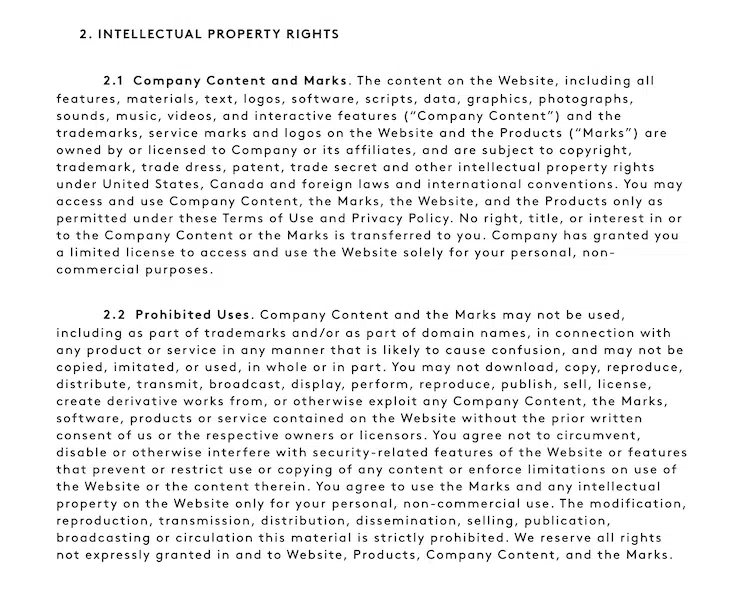
Fenty’s intellectual property disclaimer is a good sample to look at because of its clarity.
It states that all content on the site is “for your information and personal use only,” barring visitors from using, copying, reproducing, distributing, selling, licensing, or exploiting the property “for any other uses whatsoever.”
In your own disclaimer, try to mirror how Fenty’s statement effectively encompasses all of its content and clearly states the scope of its ownership.
Graphic Design Intellectual Property Disclaimer
For graphic design artists and brands, a graphic design intellectual property disclaimer is a must-have because it states your ownership over easily reproducible — and often misused — designs, like logos.
For example, the athletic fashion brand NIKE posts its intellectual property disclaimer on its Terms of Use page, which defines content and how it can be used.
See more in the screenshot I provided for you below.
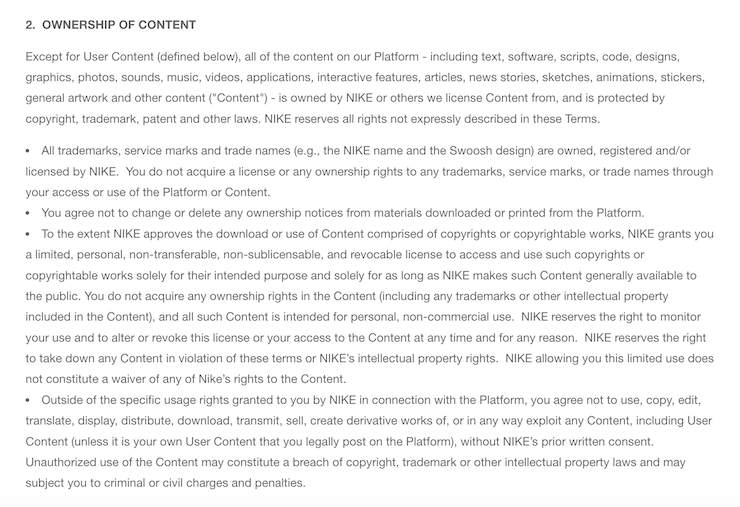
Notice that NIKE specifies within its statement that “the NIKE name and the Swoosh design,” in particular, are owned by the company.
Follow NIKE’s lead and make a note of and define your most prominent intellectual property to strengthen your protection of it.
Intellectual Property Disclaimer FAQs
How Can You Make an Intellectual Property Disclaimer?
You can create an intellectual property disclaimer by using a disclaimer generator, customizing a template, or writing one from scratch.
Generate a Free Customized Disclaimer Using Termly
Here’s how you can use Termly’s generator to create a disclaimer tailored to your needs.
1. Go to Termly’s disclaimer generator.
2. Answer a few simple prompts and questions, and go through all of the steps until you reach “Final Details.”
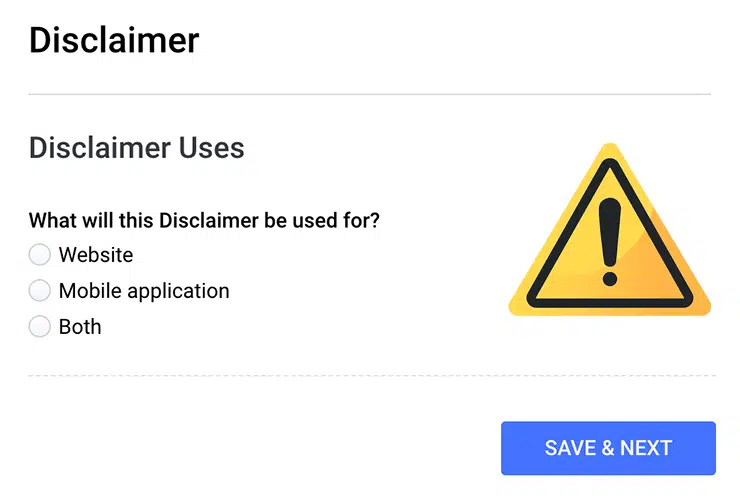
3. Once you’ve filled in everything and are satisfied with the preview, click “Publish.” You will then be prompted to create a Termly account to save and further edit your legal disclaimer.
Template
You can also download and customize our disclaimer template to make an intellectual property disclaimer for your website.
Simply fill in the blank sections with information about your business and list and name all materials and content to which the disclaimer applies.
You can then choose how you want to download and add it to your website, or embed it.
DIY
You can write your own intellectual property disclaimer. When doing so, focus on clarity.
While there are no strict legal requirements for the contents of your intellectual property disclaimer, there are elements that you should consider including, such as the following:
- Date: If creating a standalone document, include the date it was made.
- Parties: In your document, denote who owns the rights to your IP.
- Business description: If applicable, include a description of your business.
- IP description: Always include a specific description of your intellectual property; consider listing it as bullet points.
- Terms: When applicable, write out the terms of your ownership of the IP and how the IP can or cannot be used.
- Provisions: You should include a provision that retains or disclaims all interest in, title to, and rights to your IP. Other provisions include copyright provisions or the right to amend the disclaimer in writing in the future.
- Payment terms: Your disclaimer should clearly state how the artist will be paid, or if they will not receive payments or royalties for the IP.
- Signatures: When applicable, make sure all parties sign the disclaimer
These steps are a great place to start when drafting your intellectual property disclaimer and will help ensure you don’t accidentally leave out any vital information.
What Is an Intellectual Property Disclaimer Statement?
An intellectual property disclaimer is a statement that explains what rights of ownership you’re retaining over creative materials you make and describes if and how other people can share, use, or redistribute those materials.
Intellectual property includes anything developed by the human mind, including:
- Artwork
- Website designs
- Images
- Videos
- Choreography
- Written materials
- Branding
- Logos
Intellectual property, or IP, is often protected by trademarks, patents, or copyright laws:
- Trademarks: You can apply for a trademark to protect your brand and logo, especially if they appear on your products.
- Patents: These apply to ideas and inventions; you must apply for one to protect your idea.
- Copyrights: Anything unique you create is automatically protected by copyright laws, regardless of whether you distribute it publicly.
A creator might be comfortable giving away their ownership rights to a creation or desire to protect it; this is where an intellectual property disclaimer statement comes in.
An intellectual property disclaimer clarifies the terms by which the creator will or will not release their work to another entity or person.
Intellectual Property Rights vs. Copyrights vs. Trademarks
Intellectual property is a broad term encompassing copyrighted materials, but not all examples of copyrights apply to every kind of intellectual property.
Technically, intellectual property includes everything from brand and industrial materials (e.g., logos, branding, website designs, etc.) to personal materials created by individuals (e.g., writings, drawings, art, etc.).
Conversely, copyright only refers to personal materials created by an individual, while trademark is the technical term for industrial-related content.
The three terms are closely related but technically refer to different ideas and materials.
Do I Need an Intellectual Property Disclaimer?
Even though intellectual property disclaimers aren’t required by law, it’s still a best practice to post one on your website because it helps protect and explain your ownership rights over the content you make.
If anyone uses your materials outside the scope you establish in your intellectual property disclaimer, you can point to it as evidence that the individual was made aware of your rights.
Proving that they had the opportunity to see and read the disclaimer may help you win your case in court.
Where Should I Put an Intellectual Property Disclaimer?
Where you put your disclaimer depends on what intellectual property and purpose you need it for, for example:
- Add one to the footer of your website to announce your ownership of the property.
- Include an IP disclaimer directly in any newsletters or branded email disclaimers.
- As a clause in your terms and conditions agreement.
- At the bottom of any materials or content on your site that users can download, including PDFs or other file formats.
- In the description of social media or YouTube posts featuring your intellectual property.
- Onto any web page as required, like at the bottom of an article or underneath your original video content.

Hanna De La Garza is a privacy writer at Termly with a Bachelor’s Degree in Journalism from the University of Florida. She creates engaging resources on data privacy, consent management, regulatory updates, and more.
Read all posts by Hanna De La Garza
Reviewed by Masha Komnenic CIPP/E, CIPM, CIPT, FIP
Masha Komnenic is a legal counsel and Termly’s Director of Global Privacy, who received her law degree from Belgrade University. She specializes in implementing, monitoring, and auditing business compliance with privacy regulations (HIPAA, PIPEDA, ePrivacy Directive, GDPR, CCPA, POPIA, LGPD).
Read all posts reviewed by Masha Komnenic CIPP/E, CIPM, CIPT, FIP
Generate a FREE Disclaimer